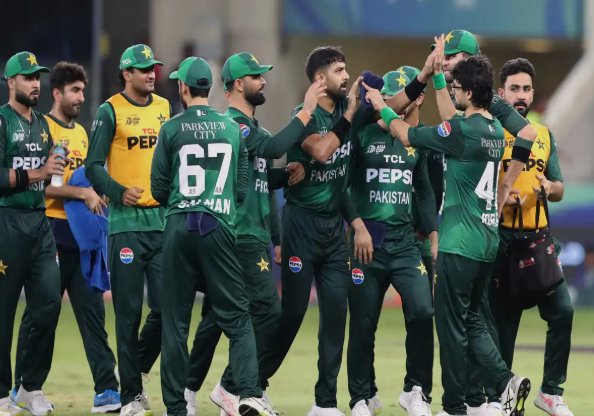
The rivalry between the Sri Lanka National CricketTeam and the Pakistan National Cricket Team has grown into one of the most competitive matchups in international cricket. From thrilling Test encounters to high-pressure World Cup clashes, their timeline reflects dramatic moments, legendary performances, and evolving cricketing styles. Both teams have showcased resilience and flair, making their head-to-head contests exciting for fans across generations.
First Encounter & Early Years (1982–1990s)
Year
Format
Venue
Key Scores
Result
Highlight / Drama
1982
Test
National Stadium, Karachi
PAK 396 & 301/4d SL 344 & 149
Pakistan won by 204 runs
Pakistan’s first-ever Test against new Test nation Sri Lanka – a massive statement win.
1982
Test
Gaddafi Stadium, Lahore
PAK 500/7 SL 240 & 158
Pakistan won by innings & 102 runs
Pakistan’s batting firepower overwhelmed Sri Lanka in their debut series.
1985–86
Test
Asgiriya Stadium, Kandy
SL 109 & 101 PAK 230
Pakistan won by innings & 20 runs
Sri Lanka’s lowest total collapse at home – early sign of Pakistan’s pace dominance.
1986
Test
Colombo (PSS)
SL 281 & 318 PAK 323/3
Match Drawn
Sri Lanka fought back bravely in their own backyard for the first draw.
1991–92
Test
Jinnah Stadium, Sialkot
PAK 423/5d SL 270 & 137/5
Match Drawn
Sri Lanka showed resilience with the bat despite Pakistan’s strong declaration.
1996
ODI (World Cup QF)
Quarter-final (India)
SL defended total
Sri Lanka won
Iconic upset! Sri Lanka knocked out Pakistan on their way to winning the 1996 World Cup. Pure magic.
Selected Iconic Clashes Across Decades
Year/Period
Format
Venue / Event
Sri Lanka Score
Pakistan Score
Result
Hero / Turning Point
1996
ODI
1996 World Cup QF
Defended total
–
Sri Lanka won
Aravinda de Silva & Sanath Jayasuriya – SL’s World Cup journey begins here.
2009
T20I
T20 World Cup Final, Lord’s
138/6 (20)
139/2 (18.4)
Pakistan won by 8 wickets
Pakistan lifts their first T20 World Cup – Younis Khan & Umar Gul star.
2014
T20I
T20 World Cup Final, Bangladesh
134/4 (17.5)
–
Sri Lanka won (vs India, but beat PAK en route)
SL wins their only T20 World Cup – a golden era moment.
2023
ODI
2023 World Cup, Hyderabad
344/9 (50)
345/4 (48.2)
Pakistan won by 6 wickets
Epic high-scoring chase – Babar Azam & co. seal thriller.
2025 (Nov)
T20I
Pakistan T20I Tri-Series Final, Rawalpindi
114 (19.1)
118/4 (18.4)
Pakistan won by 6 wickets
Mohammad Nawaz’s all-round show seals the title.
2026 (Jan)
T20I
Dambulla (3rd T20I)
160/6 (12 overs – rain)
146/8 (12)
Sri Lanka won by 14 runs
Wanindu Hasaranga spins Sri Lanka to a rain-reduced thriller win.
2026 (Feb)
T20I
T20 World Cup Super 8, Kandy
207/6 (20)
212/8 (20)
Pakistan won by 5 runs
Sahibzada Farhan’s explosive ton + record opening stand – SL nearly chased 213!
ICC Tournament Timeline Table
ICC Tournament
Year
Stage / Match Type
Result
Key Highlight / Player of the Match
Cricket World Cup (ODI)
1996
Quarter-final
Sri Lanka won
Sri Lanka’s famous upset on road to title glory.
Cricket World Cup (ODI)
2023
League Stage
Pakistan won by 6 wickets
Massive 344 vs 345 chase – one of the highest in WC history.
T20 World Cup
2009
Final
Pakistan won by 8 wickets
Pakistan becomes T20 World Champions beating SL.
T20 World Cup
2012
Semi-final
Sri Lanka won by 16 runs
SL reaches final as hosts – bowlers dominate.
T20 World Cup
2026
Super 8
Pakistan won by 5 runs
Nail-biting last-over thriller in Kandy.
Champions Trophy
2002
Group / Knockout stages
Shared / Sri Lanka strong
SL co-champions in 2002 edition hosted in SL.
Recent Sri Lanka National Cricket Team Vs Pakistan
Tournament
Venue
Date
Toss
Sri Lanka Score
Pakistan Score
Result
Series
Player of the Match
ICC Men’s T20 World Cup 2025/26 (Super Eights, Group 2)
Pallekele International Cricket Stadium, Kandy
February 28, 2026
Sri Lanka (field)
207/6 (20 overs)
212/8 (20 overs)
Pakistan won by 5 runs
T20 World Cup
Sahibzada Farhan (PAK)
Pakistan tour of Sri Lanka 2025/26 (3rd T20I – rain-reduced to 12 overs)
Rangiri Dambulla International Stadium, Dambulla
January 11, 2026
Pakistan (field)
160/6 (12 overs)
146/8 (12 overs)
Sri Lanka won by 14 runs
Pakistan tour of Sri Lanka T20I
Wanindu Hasaranga (SL)
Pakistan tour of Sri Lanka 2025/26 (1st T20I)
Rangiri Dambulla International Stadium, Dambulla
January 7, 2026
Pakistan (field)
128 (19.2 overs)
129/4 (16.4 overs)
Pakistan won by 6 wickets (20 balls rem)
Pakistan tour of Sri Lanka T20I
Shadab Khan (PAK)
Pakistan T20I Tri-Series 2025/26 (Final)
Rawalpindi Cricket Stadium, Rawalpindi
November 29, 2025
Pakistan (field)
114 (19.1 overs)
118/4 (18.4 overs)
Pakistan won by 6 wickets (8 balls rem)
Pakistan T20I Tri-Series
Mohammad Nawaz (PAK)
Pakistan T20I Tri-Series 2025/26 (6th Match)
Rawalpindi Cricket Stadium, Rawalpindi
November 27, 2025
Pakistan (field)
184/5 (20 overs)
178/7 (20 overs)
Sri Lanka won by 6 runs
Pakistan T20I Tri-Series
Dushmantha Chameera (SL)
Pakistan T20I Tri-Series 2025/26 (3rd Match)
Rawalpindi Cricket Stadium, Rawalpindi
November 22, 2025
Sri Lanka (bat)
128/7 (20 overs)
131/3 (15.3 overs)
Pakistan won by 7 wickets (27 balls rem)
Pakistan T20I Tri-Series
Mohammad Nawaz (PAK)
Sri Lanka tour of Pakistan 2025/26 (3rd ODI)
Rawalpindi Cricket Stadium, Rawalpindi
November 16, 2025
Pakistan (field)
211 (45.2 overs)
215/4 (44.4 overs)
Pakistan won by 6 wickets (32 balls rem)
Sri Lanka tour of Pakistan ODI
Mohammad Wasim (PAK)
Early Encounters and Foundation Years (1982–1990)
The cricketing relationship between Sri Lanka and Pakistan began soon after Sri Lanka gained Test status in 1982. Pakistan, already an established cricketing nation, dominated the early encounters with their experienced lineup. Sri Lanka, still developing its international presence, faced challenges but gradually adapted to the demands of top-level cricket. These early matches laid the groundwork for a competitive rivalry, with Sri Lanka learning valuable lessons against a strong Pakistani side. Players like Imran Khan and Javed Miandad played crucial roles for Pakistan, while Sri Lanka relied on emerging talents to build their team. The matches were often one-sided, but they were significant in shaping Sri Lanka’s cricketing journey. Over time, Sri Lanka began to show improvement, setting the stage for more balanced contests in the coming years. This foundational period was essential in establishing mutual respect and competitive spirit between the two nations.
Year
Format
Winner
Venue
1982
First Test Series
Pakistan
Pakistan
1986
ODI Series
Pakistan
Sri Lanka
1990
Bilateral Series
Pakistan
UAE
Rise of Sri Lanka and Competitive Balance (1991–2000)
The 1990s marked a turning point as Sri Lanka transformed into a formidable cricketing nation. Their historic victory in the 1996 Cricket World Cup, where they defeated Pakistan on their way to the title, shifted the balance of power. Sri Lanka adopted aggressive batting strategies, revolutionizing ODI cricket with players like Sanath Jayasuriya and Aravinda de Silva. Pakistan, known for its unpredictability, continued to challenge Sri Lanka with strong performances from Wasim Akram and Waqar Younis. Matches between the two sides became more competitive and unpredictable. This era saw both teams exchanging victories across formats, with no clear dominance. The rivalry intensified as both sides aimed to establish supremacy in Asia. The contests were marked by high-scoring games, dramatic finishes, and emerging cricketing strategies that influenced the global game. By the end of the decade, Sri Lanka had firmly established itself as an equal competitor.
Year
Event
Winner
Highlight
1996
World Cup Match
Sri Lanka
Tournament Triumph
1997
Test Series
Sri Lanka
Strong Performance
1999
ODI Series
Pakistan
Comeback Wins
Intense Battles in the New Millennium (2001–2010)
The early 2000s witnessed some of the most intense contests between Sri Lanka and Pakistan. Both teams featured world-class players and balanced squads, making every series highly competitive. Sri Lanka’s batting strength, led by Kumar Sangakkara and Mahela Jayawardene, often clashed with Pakistan’s formidable bowling attack, including Shoaib Akhtar and Mohammad Asif. The rivalry reached emotional heights during the 2009 tour of Pakistan, which was overshadowed by the unfortunate attack on the Sri Lankan team in Lahore. Despite this setback, cricketing ties between the two nations remained strong. On the field, matches were closely fought, with both teams enjoying success in Tests and ODIs. The competition was defined by tactical battles, individual brilliance, and resilience. This decade reinforced the rivalry as one of Asia’s most compelling cricket contests, filled with passion and unpredictability.
Year
Series
Winner
Key Moment
2004
Test Series
Sri Lanka
Home Dominance
2006
ODI Series
Pakistan
Bowling Strength
2009
Pakistan Tour
—
Historic Incident
World Cup Clashes and Global Spotlight (2011–2015)
Between 2011 and 2015, Sri Lanka and Pakistan faced each other in several high-profile ICC tournaments, bringing global attention to their rivalry. The 2011 Cricket World Cup semi-final saw Sri Lanka defeat Pakistan to reach the final, showcasing their dominance in crucial matches. Both teams displayed consistency in limited-overs formats, with strong batting lineups and versatile bowling attacks. Pakistan, however, bounced back in subsequent encounters, including the 2012 T20 World Cup where they outperformed Sri Lanka in group-stage matches. These clashes were characterized by high pressure, tactical brilliance, and match-winning performances. Players like Tillakaratne Dilshan and Shahid Afridi played key roles in defining outcomes. The rivalry during this period was balanced, with both teams proving their ability to perform on the biggest stages. These global encounters strengthened their competitive bond and entertained cricket fans worldwide.
Year
Tournament
Winner
Stage
2011
World Cup
Sri Lanka
Semi-final
2012
T20 World Cup
Pakistan
Group Stage
2015
World Cup
Sri Lanka
League Match
Modern Rivalry and Bilateral Dominance (2016–2020)
In the modern era, the Sri Lanka vs Pakistan rivalry continued to evolve with frequent bilateral series and ICC tournament encounters. Pakistan showcased consistency, especially in T20 cricket, winning the 2017 ICC Champions Trophy and performing strongly in Asia Cup tournaments. Sri Lanka, undergoing a transitional phase, struggled with consistency but still produced notable performances against Pakistan. The rivalry remained competitive, with young players stepping up to fill the shoes of legendary cricketers. Matches often featured unpredictable outcomes, reflecting the dynamic nature of both teams. Pakistan’s strength in fast bowling continued to challenge Sri Lanka’s batting lineup, while Sri Lanka relied on spin and adaptability. This period highlighted the changing dynamics of international cricket, where emerging talents and strategic gameplay defined results. Despite fluctuations in form, the rivalry maintained its excitement and significance.
Year
Format
Winner
Highlight
2017
Champions Trophy
Pakistan
Tournament Win
2018
T20 Series
Pakistan
Dominance
2019
ODI Series
Pakistan
Away Victory
Recent Years and Emerging Talents (2021–Present)
In recent years, the rivalry between Sri Lanka and Pakistan has seen a resurgence with the emergence of young and dynamic players. Sri Lanka’s rebuilding phase has brought fresh energy, while Pakistan continues to maintain a strong presence in international cricket. Matches have become more competitive, with both teams showcasing aggressive intent and modern strategies. Players like Babar Azam and Shaheen Afridi have led Pakistan’s charge, while Sri Lanka has relied on promising talents to rebuild their squad. The Asia Cup and bilateral series have provided thrilling encounters, often going down to the wire. The rivalry is now characterized by a balance between experience and youth, ensuring exciting contests. As both teams aim for global success, their head-to-head battles remain crucial in shaping their क्रिकेटing future and maintaining their strong presence in world cricket.
Year
Series/Event
Winner
Key Highlight
2022
Asia Cup
Sri Lanka
Championship Win
2023
Test Series
Pakistan
Home Success
2024
Bilateral Series
—
Competitive Matches
Legendary Players and Memorable Moments
The Sri Lanka vs Pakistan timeline is enriched by legendary players and unforgettable moments that have defined their rivalry. Sri Lankan greats like Kumar Sangakkara and Muttiah Muralitharan have delivered match-winning performances, while Pakistan legends such as Wasim Akram and Inzamam-ul-Haq have dominated games with skill and experience. Memorable matches, including World Cup encounters and dramatic Test finishes, have left lasting impressions on fans. These players not only contributed to their teams’ success but also elevated the intensity of the rivalry. Their performances often turned matches around, creating iconic cricketing memories. The legacy of these legends continues to inspire new generations, ensuring that the rivalry remains vibrant and competitive. This blend of history, talent, and passion makes Sri Lanka vs Pakistan one of the most exciting contests in international cricket.
Player
Team
Era
Contribution
Kumar Sangakkara
Sri Lanka
2000s–2010s
Batting Legend
Muttiah Muralitharan
Sri Lanka
1990s–2010s
Spin Wizard
Wasim Akram
Pakistan
1990s
Fast Bowling Icon
Inzamam-ul-Haq
Pakistan
1990s–2000s
Consistent Performer
Conclusion
The timeline of the Sri Lanka National Cricket Team vs Pakistan National Cricket Team rivalry highlights a journey of growth, competition, and unforgettable cricketing moments. From Pakistan’s early dominance to Sri Lanka’s rise and modern-day balance, the rivalry has evolved significantly over decades. Their encounters across formats continue to deliver excitement, showcasing skill, resilience, and sportsmanship. With emerging players and changing dynamics, the future promises even more thrilling contests. As both teams strive for excellence on the global stage, their rivalry remains a vital part of cricket history, captivating fans and preserving the spirit of competitive international cricket.