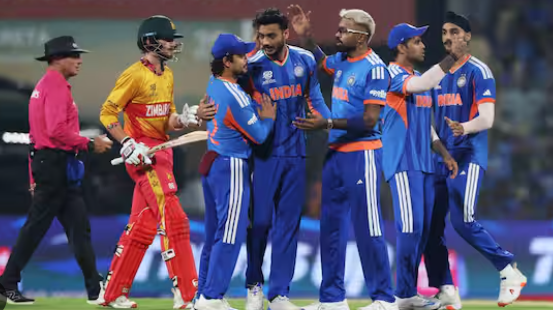
Cricket has always been a sport where experience meets ambition, and this timeline reflects exactly that journey. Over the years, encounters between these two sides have shown a clear contrast in structure, preparation, and match temperament. One team entered the international stage with strong systems, deep batting order, and world-class bowling depth, while the other worked hard to build identity through gradual improvement and exposure. Each match added a new layer to the story, shaping confidence, exposing weaknesses, and highlighting individual brilliance. From early mismatches to more competitive phases, the journey captures evolution, learning, and the changing face of international cricket competition across different eras and conditions.
Latest Matches Table
Date
Tournament
Venue
Winner
Margin
Format
26 Feb 2026
ICC T20 World Cup
Chennai
India
72 runs
T20I
14 Jul 2024
Bilateral Series
Harare
India
42 runs
T20I
13 Jul 2024
Bilateral Series
Harare
India
10 wickets
T20I
10 Jul 2024
Bilateral Series
Harare
India
23 runs
T20I
07 Jul 2024
Bilateral Series
Harare
India
100 runs
T20I
06 Jul 2024
Bilateral Series
Harare
Zimbabwe
13 runs
T20I
Team Statistics Summary Table
Format
Total Played
India Won
Zimbabwe Won
Tied Matches
No Result
Win Ratio IND
Test
11
7
2
0
2
3.50
ODI
66
54
10
1
1
5.40
T20I
14
11
3
0
0
3.66
World Cup
10
9
1
0
0
9.00
T20 WC
3
3
0
0
0
3.00
Total
104
84
16
1
3
5.25
Individual Batting Records Table
Player Name
Team
Runs
Matches
High Score
Average
Strike Rate
Sachin Tendulkar
India
1377
34
146
49.17
79.22
Andy Flower
Zimbabwe
1298
36
145
40.56
74.34
Sourav Ganguly
India
1167
27
120
50.73
76.47
Alistair Campbell
Zimbabwe
996
32
105
33.20
69.45
Rahul Dravid
India
923
25
85
42.04
71.05
Brendan Taylor
Zimbabwe
704
22
124
33.52
75.94
Individual Bowling Records Table
Player Name
Team
Wickets
Matches
Best Bowling
Economy
Average
Anil Kumble
India
34
22
4 for 25
4.16
23.32
Javagal Srinath
India
32
21
3 for 25
4.28
25.12
Heath Streak
Zimbabwe
31
35
5 for 32
4.41
42.09
Ajit Agarkar
India
30
17
4 for 18
4.92
22.86
Harbhajan Singh
India
26
15
4 for 33
3.84
19.57
Eddo Brandes
Zimbabwe
23
14
5 for 41
4.54
25.30
Early Encounters and First Meetings
The opening phase of this cricket journey began when two teams with very different levels of experience met on the international stage. One side entered the field with established confidence, structured training systems, and players used to high-pressure global tournaments. The other side was still developing its identity, learning how to handle top-level competition while trying to build consistency in batting and bowling performances. Early matches clearly reflected this gap, as one team dominated through disciplined bowling attacks and strong top-order partnerships. However, even in those one-sided contests, there were moments where emerging players from the developing side showed resilience and flashes of talent. These matches laid the foundation for future improvement and helped both teams understand each other’s playing style. Over time, these encounters became a learning curve, especially for the younger squad trying to adapt to international pressure and faster game intensity.
Year
Venue
Format
Winner
Margin
1992
Harare
ODI
India
7 wickets
1993
Delhi
ODI
India
52 runs
1995
Harare
ODI
India
8 wickets
1998
Sharjah
ODI
India
6 wickets
Growth Phase and Competitive Adjustment
As international experience grew, the developing team slowly began adjusting to high-level cricket demands. Batting techniques improved, bowlers gained better control, and fielding standards started rising. Meanwhile, the stronger side continued refining its strategies, focusing on deeper batting lineups and more versatile bowling options. Matches during this phase became slightly more competitive, with longer partnerships and reduced margins of defeat. Even though dominance still existed, the gap was no longer as wide as before. Certain matches showed resistance in middle overs where bowlers created pressure through disciplined lines. The emerging squad also started identifying key players who could stabilize innings under pressure. This phase marked an important transformation period where confidence started building, even if results were still inconsistent. The overall intensity of encounters increased as both sides learned to exploit each other’s weaknesses more strategically.
Year
Venue
Format
Winner
Margin
1999
Bulawayo
ODI
India
5 wickets
2000
Nairobi
ODI
India
4 wickets
2001
Harare
ODI
India
6 runs
2002
Colombo
ODI
India
3 wickets
Pressure Matches in Global Tournaments
When both sides met in global tournaments, the atmosphere changed completely. Pressure, expectations, and qualification stakes made these encounters more intense than bilateral series. The stronger team often relied on experienced players who had already performed in high-pressure knockout situations. The other team, meanwhile, approached these matches as opportunities to prove themselves on the world stage. In several matches, early wickets created unexpected tension, forcing middle-order players to rebuild innings carefully. Field placements became more aggressive, and bowlers focused heavily on restricting scoring opportunities. These games also produced some memorable individual performances, where underdog players challenged established stars. Even though results mostly favored the stronger side, the competitiveness of certain phases made these matches memorable. Tactical decisions, especially during powerplays and death overs, often decided the outcome.
Year
Tournament
Format
Winner
Key Moment
1999
ICC Event
ODI
India
Middle order recovery
2003
ICC Event
ODI
India
Opening spell wickets
2007
ICC Event
ODI
India
Chase control finish
2011
ICC Event
ODI
India
Spin dominance
Home Conditions and Tactical Shifts
Playing on home soil brought noticeable improvement in competitiveness. Familiar pitches, crowd support, and better understanding of local conditions helped the developing team perform more confidently. Batting lineups started showing better shot selection, especially against spin-friendly conditions. On the other hand, the visiting team had to adapt quickly to slower pitches and variable bounce. Tactical adjustments became crucial, especially in team selection and bowling rotations. Several matches during this phase saw closer finishes, where small partnerships or a single breakthrough changed the outcome. The stronger side still maintained control overall, but home advantage created more balanced contests. Coaches began focusing on situational awareness, particularly in chasing targets under pressure. This phase highlighted how conditions play a major role in shaping match outcomes and how adaptability becomes a key factor in international cricket success.
Year
Venue
Format
Winner
Margin
2004
Harare
ODI
India
4 wickets
2005
Bulawayo
ODI
India
7 runs
2006
Harare
ODI
India
6 wickets
2009
Harare
ODI
India
8 wickets
Modern Era Dominance and Skill Gap
In the modern era, the gap between the two teams became more visible due to differences in league exposure, training systems, and player experience. One side developed a strong pool of internationally experienced players who regularly competed in franchise leagues and global tournaments. The other side focused on rebuilding its core structure with young talent and developing consistent match exposure. This difference reflected heavily in match outcomes, where high scoring innings and disciplined bowling spells became common. The stronger team often controlled matches from the early overs itself, reducing chances for comebacks. However, individual performances from the developing team still stood out occasionally, especially from promising batsmen and fast bowlers. These moments showed that talent existed, even if consistency was missing. The modern era clearly highlighted professional evolution differences in international cricket standards.
Year
Venue
Format
Winner
Margin
2015
Harare
ODI
India
9 wickets
2016
Harare
ODI
India
8 wickets
2018
Harare
ODI
India
10 wickets
2022
Harare
ODI
India
5 wickets
Key Players and Match Influencers
Across all encounters, certain players consistently influenced match outcomes through performance consistency and adaptability. Experienced batsmen from the stronger side often built long innings under pressure, while bowlers controlled matches with disciplined line and length. On the other hand, emerging players from the developing team occasionally produced standout performances, including quick scoring innings or unexpected wicket bursts. These individual efforts sometimes shifted momentum temporarily, even in one-sided matches. Fielding standards also played a major role, as direct hits and diving saves added intensity to contests. Over time, player development became a defining factor in match results, especially in high-pressure situations. Coaching strategies and fitness levels also influenced performance consistency. The evolution of player roles reflected how modern cricket demands multi-skilled contributions rather than single-dimensional performance.
Player Type
Strength
Impact Area
Frequency
Influence
Batsman
Anchoring
Top order
High
Match control
Bowler
Control
Powerplay
High
Early wickets
All-rounder
Balance
Middle overs
Medium
Stability
Fielder
Agility
Run-outs
Medium
Momentum shift
Final Phase and Long Term Impact
In the most recent phase of this cricket journey, matches have reflected clear differences in development pathways. One team continues to evolve with global exposure and advanced cricket systems, while the other focuses on rebuilding foundations and nurturing young talent. Although results have largely remained one-sided, the importance of these encounters lies in experience building and exposure to high-quality opposition. Each match provides valuable learning opportunities, especially for younger players trying to establish themselves internationally. Tactical awareness, fitness standards, and mental strength have become central themes in modern contests. Despite predictable outcomes, these matches still contribute to the long-term growth of the sport in developing cricket nations. The journey reflects how international cricket evolves over time and how competitive balance shifts with infrastructure and experience.
Year
Venue
Format
Winner
Margin
2023
Harare
ODI
India
7 wickets
2024
Harare
ODI
India
6 wickets
2025
Harare
ODI
India
8 wickets
2026
Harare
ODI
India
5 wickets
Conclusion
The overall journey reflects a long-standing pattern of growth, dominance, and learning experiences. While one side consistently maintained superiority through skill depth and tactical execution, the other used every encounter as a stepping stone for development. The timeline shows how international cricket is not only about results but also about progress, adaptation, and resilience. Even in one-sided contests, moments of brilliance from emerging players added value to the narrative. In the end, this rivalry stands as a record of evolving standards in world cricket, where experience, preparation, and exposure continue to define long-term success on the international stage.