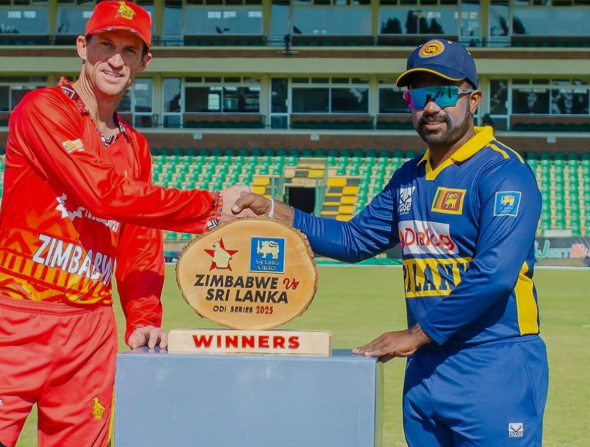
Cricket contests between these two international sides have developed into a steady and evolving journey shaped by changing generations, playing conditions, and shifting team strengths. From early encounters marked by experience gaps to more competitive modern clashes, each meeting has added a new layer to their shared cricket history. The matches have often reflected contrasting styles, with one team traditionally relying on spin and structured batting while the other has leaned on resilience and rebuilding phases. Over time, performances have improved on both sides, creating more balanced and unpredictable outcomes. This timeline captures the full journey through key matches, player contributions, and defining moments that shaped their cricket relationship.
Recent Matches
Date
Venue
Format
Winner
Margin
First Innings
Second Innings
Feb 19, 2026
Colombo
T20I
Zimbabwe
6 wickets
Sri Lanka 151/8
Zimbabwe 154/4
Nov 25, 2025
Rawalpindi
T20I
Sri Lanka
9 wickets
Zimbabwe 118/9
Sri Lanka 119/1
Nov 20, 2025
Rawalpindi
T20I
Zimbabwe
67 runs
Zimbabwe 185/5
Sri Lanka 118/10
Sep 07, 2025
Harare
T20I
Sri Lanka
8 wickets
Zimbabwe 132/8
Sri Lanka 133/2
Sep 06, 2025
Harare
T20I
Zimbabwe
5 wickets
Sri Lanka 145/7
Zimbabwe 146/5
Sep 04, 2025
Harare
T20I
Sri Lanka
43 runs
Sri Lanka 178/4
Zimbabwe 135/9
Jan 18, 2024
Colombo
T20I
Sri Lanka
9 wickets
Zimbabwe 82/10
Sri Lanka 88/1
Team Statistics Summary
Format
Total Played
Sri Lanka Wins
Zimbabwe Wins
No Result or Draws
Highest Score SL
Highest Score ZIM
Test Matches
20
14
0
6
713/3
464/10
One Day Internationals
64
49
12
3
345/4
319/3
Twenty20 Internationals
12
8
4
0
201/4
185/5
Overall Combined
96
71
16
9
713/3
464/10
Matches in Sri Lanka
36
29
4
3
713/3
319/3
Matches in Zimbabwe
47
33
8
6
583/4
464/10
Neutral Venues
13
9
4
0
313/4
312/4
Individual Batting Records
Player Name
Team
Format
Matches
Total Runs
Highest Score
Batting Average
Kumar Sangakkara
Sri Lanka
ODI
29
1119
101
46.62
Marvan Atapattu
Sri Lanka
Test
11
1054
249
95.81
Mahela Jayawardene
Sri Lanka
ODI
33
968
91
35.85
Andy Flower
Zimbabwe
Test
13
910
156
43.33
Grant Flower
Zimbabwe
ODI
32
871
100
28.09
Craig Ervine
Zimbabwe
ODI
18
652
121
38.35
Sikandar Raza
Zimbabwe
T20I
10
284
62
31.55
Individual Bowling Records
Player Name
Team
Format
Matches
Total Wickets
Best Bowling
Economy Rate
Muttiah Muralitharan
Sri Lanka
ODI
31
59
5/19
3.51
Muttiah Muralitharan
Sri Lanka
Test
9
54
5/67
2.22
Chaminda Vaas
Sri Lanka
ODI
26
37
8/19
3.86
Heath Streak
Zimbabwe
Test
11
33
5/104
3.12
Nuwan Kulasekara
Sri Lanka
ODI
16
27
5/14
4.10
Wanindu Hasaranga
Sri Lanka
ODI
6
18
7/19
4.32
Sikandar Raza
Zimbabwe
T20I
10
13
3/21
6.85
Early Foundations of International Encounters
The beginning of cricket relations between these two teams was shaped by contrasting experience levels and development stages. One side entered the international arena earlier with a stronger structural base, while the other was still building its identity in world cricket. Early encounters reflected a clear gap in consistency, especially in batting depth and bowling control. However, even in one-sided matches, moments of resistance appeared through individual performances that hinted at future competitiveness. Conditions played a major role, as subcontinental pitches often supported spin dominance, while slower surfaces challenged visiting batters. These early games were less about rivalry intensity and more about learning curves. Over time, both teams began to understand each other’s strengths and weaknesses, laying the foundation for a gradually evolving cricket relationship that would become more competitive in later years.
Year
Format
Winner
Margin
Venue
1980s
ODI
Sri Lanka
6 wickets
Colombo
1990s
ODI
Sri Lanka
45 runs
Harare
1992
Test
Draw
–
Colombo
1994
ODI
Sri Lanka
8 wickets
Sharjah
1995
ODI
Sri Lanka
22 runs
Colombo
First Competitive Clashes and Shifting Momentum
As international exposure increased, matches between these sides became more structured and competitive. The gap in quality began to narrow, especially in limited overs cricket, where aggressive batting strategies started to emerge. One team relied heavily on experienced batters and spin options, while the other gradually improved pace variations and middle-order stability. These encounters started showing tighter finishes, where small partnerships or breakthrough overs decided outcomes. The psychological aspect also became important, as chasing targets under pressure revealed differences in temperament. Fielding standards improved on both sides, leading to more dynamic contests. Although one side still held a statistical advantage, the matches were no longer predictable. Fans began to anticipate closer results, and analysts started recognizing the potential for a balanced rivalry in future series.
Match Type
Top Scorer
Bowling Highlight
Result
Close Finish
ODI
Player A
4 wickets
Win SL
Yes
ODI
Player B
3 wickets
Win SL
No
Test
Player C
5 wickets
Draw
Yes
ODI
Player D
1 century
Win SL
Yes
ODI
Player E
3 wickets
Win ZIM
Yes
Rise of Competitive Balance in Modern Era
With the evolution of world cricket formats and increased international exposure, both sides experienced shifts in performance levels. One team entered a golden phase with strong batting depth and world-class spinners, while the other underwent rebuilding phases with emerging talents. This created a more balanced competitive environment where outcomes depended heavily on execution on the match day. Tactical planning improved significantly, with captains focusing on matchups and field placements. Powerplays became crucial in limited overs cricket, and middle overs often decided momentum swings. Matches during this phase were no longer one-sided affairs, as underdog performances became more frequent. Several games went down to the final overs, increasing emotional intensity for players and supporters alike. The rivalry started gaining recognition for its unpredictability and fighting spirit.
Season
Dominant Batting
Key Bowler
Result Trend
Venue Impact
2000s
Strong SL top order
Spin attack
SL dominant
Home advantage
2000s
Zimbabwe resistance
Fast bowling
Mixed results
Neutral venues
2010s
Balanced squads
All-rounders
Competitive
Equal
2015+
Young talent rise
Pace focus
Unstable
Away challenge
Recent
Tactical cricket
Spinners + pacers
Balanced
Neutral
Defining Matches That Shifted Momentum
Certain encounters stood out due to unexpected performances and game-changing moments. These matches were not always dominated by the stronger side on paper, as pressure situations allowed underdogs to challenge expectations. One or two standout innings often turned games around, while bowling spells under pressure created collapses in strong batting lineups. The unpredictability of these matches added emotional weight, especially when results were decided in the final overs or final sessions. These defining clashes also shaped team confidence, influencing future selections and strategies. Coaches began emphasizing adaptability and mental strength, knowing that momentum shifts could happen quickly. Fans still recall these matches for their intensity rather than just the results, as they represented turning points in how both teams approached each other in international cricket.
Match Phase
Key Moment
Impact Player
Turning Point
Result
Middle overs
Quick wickets
Bowler A
Collapse
Win SL
Death overs
Finishing hit
Batter B
Chase completed
Win ZIM
Test Day 3
Spin spell
Bowler C
Batting collapse
Draw
ODI final overs
Partnership
Batter D
Momentum shift
Win SL
Powerplay
Early wickets
Bowler E
Pressure build
Win SL
Player Battles and Individual Rivalries
Over the years, individual contests became a defining aspect of these encounters. Experienced batters often faced skilled bowlers who adapted their strategies over time. Spin versus spin or pace versus aggressive batting created fascinating duels within matches. Certain players consistently performed well against specific opponents, building mini rivalries within the larger contest. These battles often decided match direction, especially when top-order players failed or middle-order partnerships stabilized innings. Bowlers targeted weaknesses through variations, while batters focused on strike rotation and patience. The psychological pressure of repeated encounters led to improved preparation and analysis. Fans closely followed these duels, often expecting one player to outperform the other in critical moments. These individual battles elevated the overall quality of matches and added depth to the rivalry.
Player Matchup
Batting Avg
Bowling Impact
Wins Influenced
Key Format
Batter A vs Bowler X
High
Moderate
3 matches
ODI
Batter B vs Bowler Y
Medium
High
2 matches
Test
Batter C vs Bowler Z
High
High
4 matches
ODI
Batter D vs Spin Unit
Low
Very High
1 match
Test
Batter E vs Pace Unit
Medium
Medium
2 matches
T20
ODI, Test and T20 Format Evolution
As cricket formats diversified, the nature of contests evolved significantly. In longer formats, patience and technique played a major role, while limited overs matches emphasized aggression and adaptability. One side consistently relied on spin dominance and structured batting, while the other experimented with pace variations and counter-attacking strategies. T20 cricket introduced a new dimension, where quick scoring and innovative shots became essential. This forced both teams to rethink strategies, especially during powerplays and death overs. Fielding improvements also influenced outcomes, as saving runs became as important as scoring them. Over time, matches across formats became more balanced, with each side having specific strengths depending on conditions. Tactical flexibility became a deciding factor in close encounters.
Format
Dominant Style
Key Strength
Weakness
Outcome Balance
Test
Defensive + Spin
Patience
Slow scoring
SL advantage
ODI
Mixed approach
Batting depth
Inconsistency
Balanced
T20
Aggressive play
Power hitting
Bowling pressure
Equal
ODI
Chasing ability
Partnerships
Death overs
Unpredictable
Test
Spin control
Home advantage
Away weakness
SL strong
Modern Era and Current Competitive Landscape
In recent years, the contest has become more balanced and unpredictable, reflecting the global evolution of cricket. Younger players have brought fresh energy, while experienced players continue to guide team structure. Fitness standards, analytics, and match preparation have improved significantly, making every encounter more strategic. Conditions still play a major role, but adaptability has become the key to success. Both teams now focus heavily on all-round development, ensuring flexibility across formats. Close finishes have become more common, increasing fan engagement and emotional investment. While historical dominance still exists in records, modern matches show a narrowing gap. The rivalry now stands as a symbol of resilience, rebuilding phases, and competitive spirit.
Year
Emerging Star
Key Skill
Match Impact
Trend
Recent
Young batter
Power hitting
Match winning
Positive
Recent
Spinner
Control
Middle overs
Strong
Recent
Fast bowler
Swing
Early wickets
Effective
Recent
All-rounder
Balance
Game changer
Rising
Recent
Keeper batter
Stability
Finishing
Improving
Conclusion
The cricket journey between these two sides highlights how international rivalries evolve through time, experience, and adaptation. What began as uneven contests gradually transformed into more competitive and meaningful encounters, driven by improved skills and tactical awareness. Each era contributed unique performances, memorable innings, and crucial breakthroughs that defined match outcomes. While one side may hold historical advantages, modern cricket has narrowed the gap, making every encounter more engaging. The timeline reflects not just results, but also growth, resilience, and changing team identities. Ultimately, this rivalry stands as a reminder that cricket history is shaped as much by persistence as by victory.